Rosemary & Kalamata Focaccia
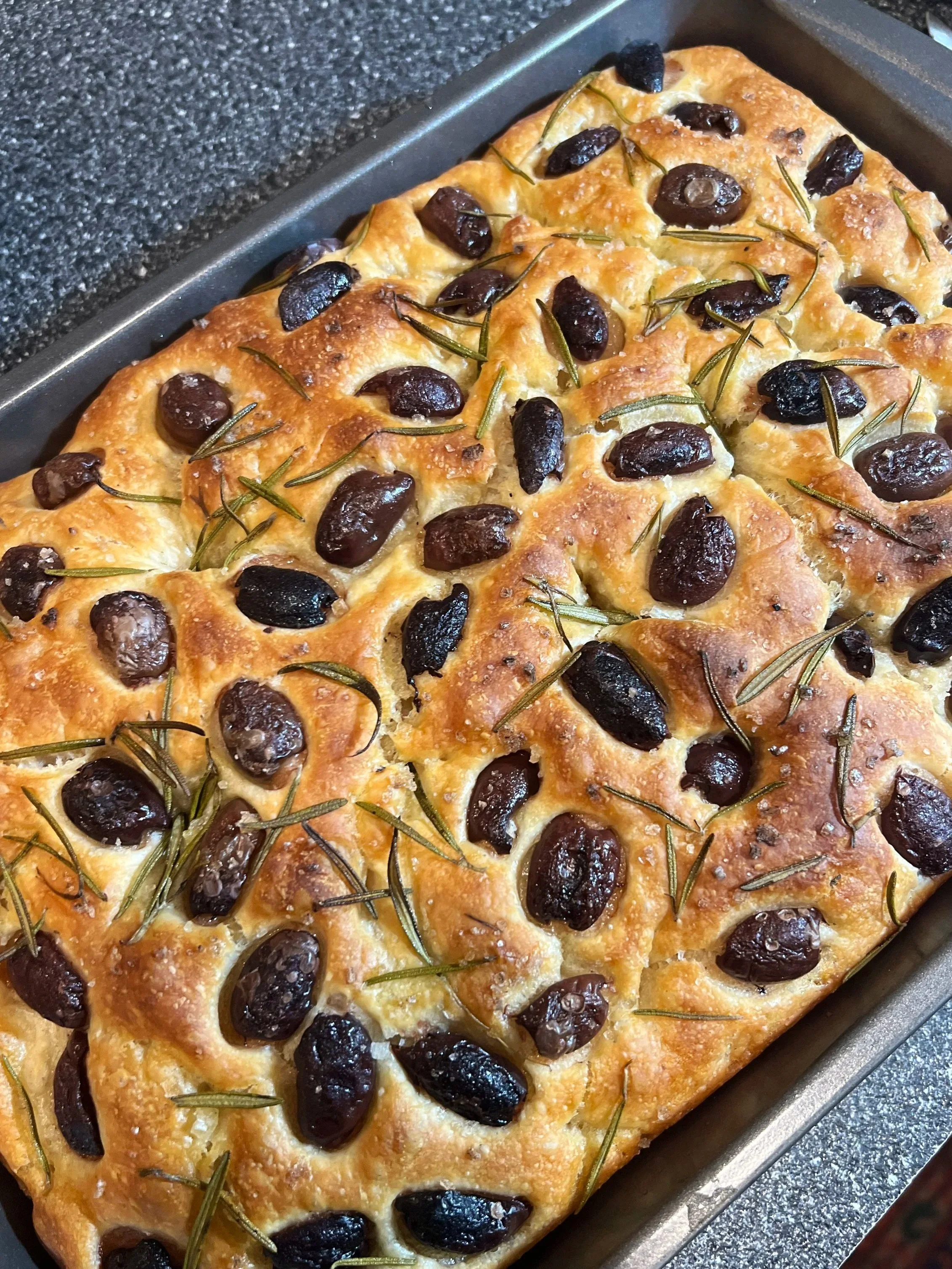
This is the focaccia that will make you want to bake bread every weekend. Pillowy, airy and impossibly light on the inside with a golden, crispy bottom — the kind you only get from a generous pour of good olive oil and a metal pan. Topped with fragrant fresh rosemary, briny kalamata olives and a finish of flaky sea salt, this is the kind of bread that disappears within minutes of hitting the table.
The process is gentle and patient — high hydration dough, careful folds, two long proofs. Don't rush it. Every step exists for a reason and the results speak for themselves.
Why You'll Love This
1. That crispy bottom — the generous olive oil in the pan creates a golden, almost fried bottom crust that is genuinely one of the best textures in baking.
2. Big beautiful bubbles — the high hydration dough and gentle handling create an open, airy crumb full of those signature air pockets.
3. Incredibly forgiving — unlike most bread, focaccia does not require shaping skill. The dough does the work.
4. Completely vegan — no dairy, no eggs. Just flour, water, olive oil and time.
5. Versatile — serve as a side, use for sandwiches, dip in olive oil, eat warm straight from the pan. There is no wrong way.
6. Better than bakery — once you make this you will genuinely stop buying focaccia.
Ingredients You Need
Full ingredients with measurements are in the recipe card below. Read through this section for substitution options and key tips.
For the Dough
White bread flour, 12% protein or higher — protein content matters here. Higher protein = stronger gluten = better bubble structure. Look for bread flour specifically.
Warm water — aim for 38°C / 100°F. Too hot kills yeast, too cold slows it. Should feel comfortably warm on your wrist. Use the higher amount (420ml) for a fluffier crumb.
Extra virgin olive oil — use a good one. You will taste it. The oil is a flavor ingredient here, not just a cooking medium.
Instant yeast — no need to activate first — add directly to the dough. If using active dry yeast, dissolve in warm water with honey first and wait 5 minutes until foamy.
Honey, sugar or agave — feeds the yeast and helps with browning. Any of the three work — the amount is too small to affect the final flavor.
Fine sea salt — added to the dough for flavor. Do not substitute table salt — the flavor is noticeably different.
For the Topping
3 tbsp olive oil for the pan — do not be tempted to use less. This is what creates the crispy bottom. Be
generous!
Fresh rosemary — dried does not work here. Fresh herbs get pressed into the dough and infuse as they
bake. The aroma is incredible.
Kalamata olives — pitted, halved or whole. Their brininess balances the richness of the olive oil p
erfectly.
Flaky sea salt — Maldon or similar. This is the finishing salt — different from the fine salt in the dough.
Tips for Making Focaccia
1. Use a metal pan, not glass — metal conducts heat efficiently and gives you that crispy golden bottom. Glass insulates too much.
2. Do not add more flour — this dough is meant to be sticky and wet. That high hydration is what creates the big bubbles. Trust the process.
3. The stretch and fold builds structure — you are developing gluten without kneading. Do not skip rounds.
4. Be generous with olive oil — in the pan and on top. It sounds like a lot. It is a lot. That is the point.
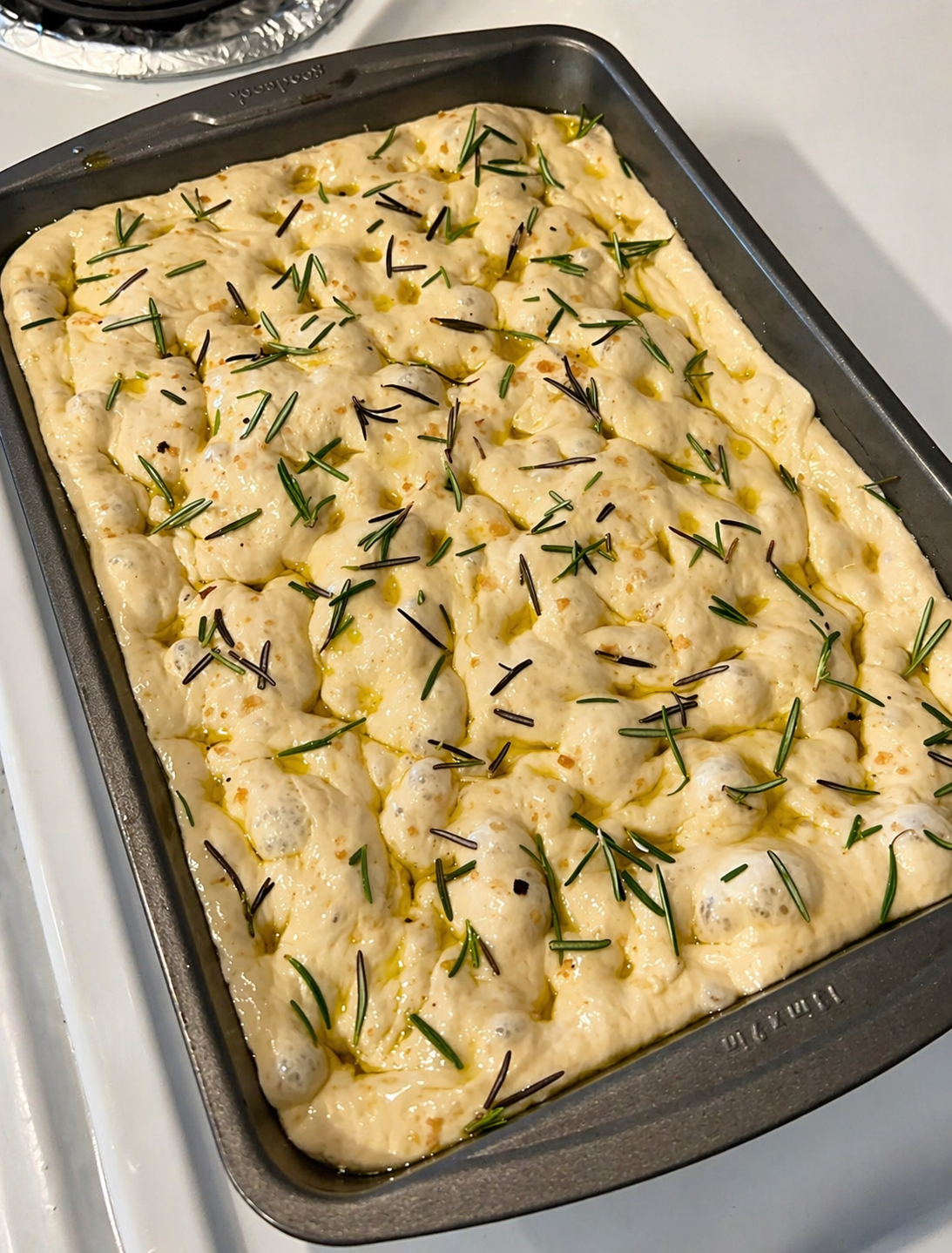
5. Look for the jiggle — before baking the dough should wobble like jello when you shake the pan. If it is not jiggling, give it more time.
6. Dimple gently — press straight down with oiled fingers, softly. You are creating dimples, not deflating the dough.
7. Lowest rack for baking — gives you the best bottom crust. Move up for the last 5 minutes if you want more color on top.
8. Transfer to a rack immediately — leaving it in the pan traps steam and softens the crispy bottom.
How to Store Focaccia
Same day: genuinely best the day it is made, still slightly warm from the oven.
Room temperature: wrapped for up to 2 days.
Revive the crust: reheat in a hot oven (220°C / 430°F) for 5 minutes — almost freshly baked.
Freezer: slice, wrap individually in plastic, freeze up to 1 month. Reheat from frozen at 200°C for 8–10 minutes.
Make ahead: after first proof, refrigerate overnight. Next day: rest 30 minutes at room temperature, then continue from pan preparation step.
Recipe
Prep Time: 30 mins · Proof Time: 2.5–3 hours · Bake Time: 18–24 mins · Serves: 12
Ingredients
For the Dough
500g (4 cups, spooned and leveled) white bread flour, 12% protein or higher
410–420ml warm water (use the higher amount for a fluffier crumb)
15ml (1 tbsp) extra virgin olive oil
6g (1½ tsp) instant yeast
5g (1 tsp) honey, sugar or agave
10g (2 tsp) fine sea salt
For the Pan & Topping
3 tbsp extra virgin olive oil for the pan
Extra virgin olive oil for drizzling
Fresh rosemary
Kalamata olives
Flaky sea salt
Notes Before You Start
Use a metal pan — not glass. Metal conducts heat better and gives you that crispy, golden bottom that makes focaccia what it is.
Embrace the stickiness — this is a high hydration dough and it should feel sticky and wet. Do not add more flour. The stickiness is what creates those big beautiful air bubbles.
Look for the jiggle — before baking your dough should be very puffy and jiggle like jello when you shake the pan. If it's not there yet, give it more time.
Handle gently after proofing — all those air bubbles you've spent hours building are fragile. Treat the dough with care once it's proofed.
Instructions
Mix the Dough
In a large bowl whisk together the warm water, olive oil, honey and yeast until combined.
Add the flour and salt and mix until fully combined — the dough will be sticky and shaggy. That's exactly right.
Cover and rest for 30 minutes. A longer rest builds better gluten structure and more bubbles.
Stretch & Fold
Perform 2–3 rounds of stretch and folds to build structure. For each round: pull one side of the dough up and fold it over the top, rotate the bowl and repeat until you've completed about 8 folds total.
Rest 15 minutes between each round.
First Proof
Cover the bowl and let the dough rise at room temperature for 1–1.5 hours until slightly puffy.
Prepare the Pan
Line a 9x13 inch metal baking tray with parchment paper.
Pour 3 tbsp of olive oil into the pan — don't be tempted to use less. This is what creates the crispy bottom.
Transfer the Dough
Gently transfer the dough to the oiled pan. Lightly fold once if needed but don't deflate it.
Let it relax and spread naturally across the pan — don't force or stretch it.
Second Proof
Cover and let proof for another 1–1.5 hours until the dough is very puffy and jiggles like jello when you shake the pan gently.
This step is critical for big bubbles — don't rush it or skip it.
Preheat the Oven
Preheat your oven to 220°C / 430°F.
Place your oven rack on the lowest position.
Dimple & Top
Drizzle olive oil generously over the top of the proofed dough.
Using oiled fingers, gently dimple the dough by pressing straight down softly — you want indentations, not deflation. Work slowly and carefully.
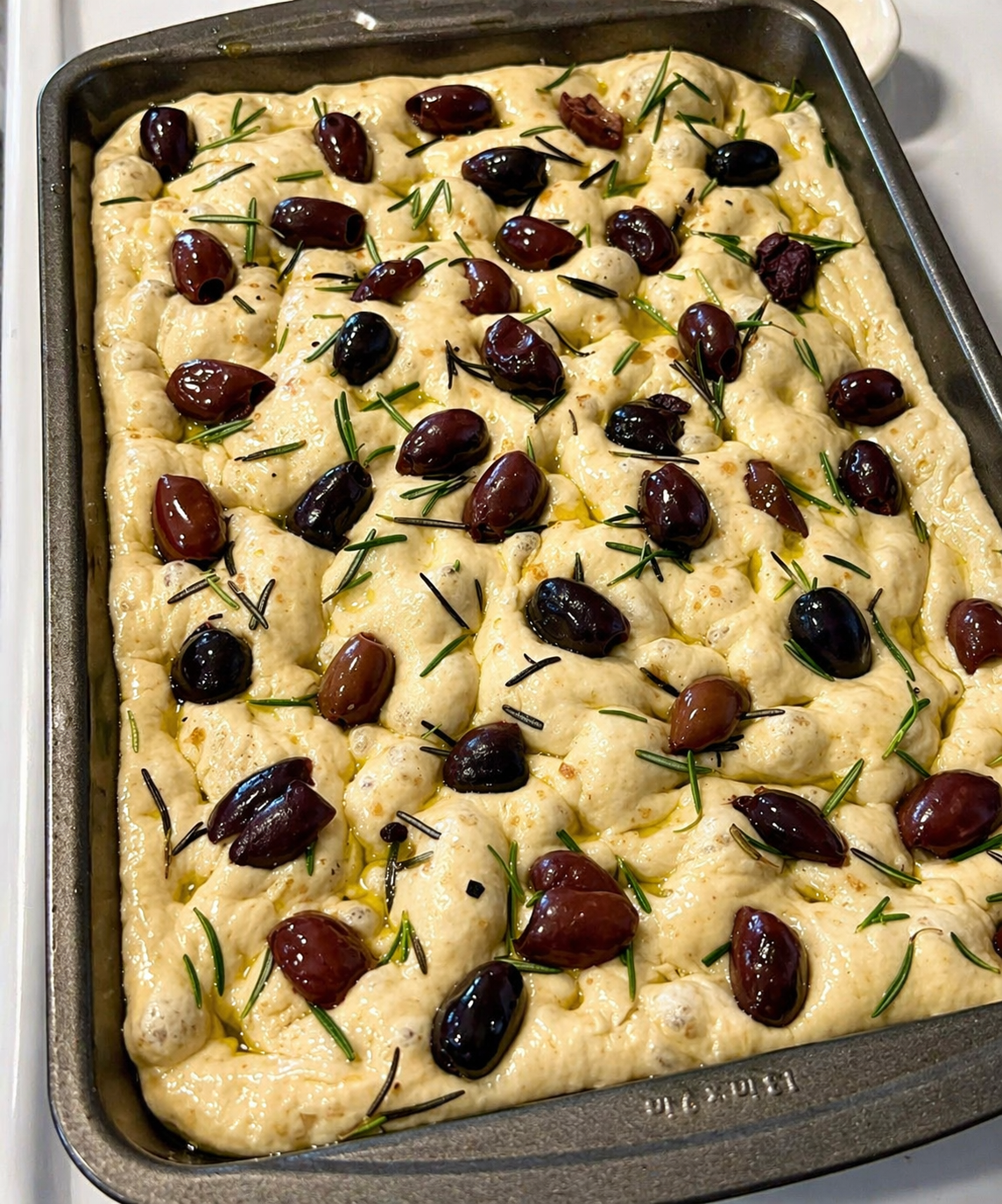
Press fresh rosemary sprigs and kalamata olives into the dimples.
Finish with a generous pinch of flaky sea salt.
Bake
Bake on the lowest rack for 15–18 minutes until deeply golden.
Optional: move to the middle rack for the last 5 minutes for even browning on top.
Total bake time is 18–24 minutes — you're looking for a rich golden colour all over.
Finish & Cool
Immediately transfer to a cooling rack.
Drizzle with a little more olive oil and a pinch of flaky salt.
Rest for 15 minutes before slicing — this lets the crumb set properly.
Notes
Flour matters: Use bread flour with at least 12% protein. All purpose flour will work in a pinch but won't give you the same chew and structure.
Water temperature: Warm but not hot — around 38°C / 100°F. Too hot will kill the yeast, too cold will slow it down significantly.
Make ahead: After the first proof, cover the dough tightly and refrigerate overnight. The next day take it out, let it come to room temperature for 30 minutes, then continue from the pan preparation step. A cold overnight proof actually develops even more flavour.
Storage: Focaccia is best eaten the day it's made. Store leftovers wrapped at room temperature for up to 2 days. Reheat in a hot oven for 5 minutes to revive the crust.
Happiness is Homemade · saveurbyv.com
